
Coaching for Healthcare Professionals in Charleston, SC
Gnosis Wellness Collective offers non-clinical coaching built on ADAPT, a manualized framework for identifying what matters most to you and building sustained action toward it. We work with physicians, nurses, nurse practitioners, physician assistants, residents, therapists and technologists, EMS and paramedics, and the people in support and administrative roles who keep a department running.
You Went into Healthcare for a Reason
Most people who work in medicine can still tell you their initial reason, and it is usually something specific ; a person, a moment, a thing they wanted to be able to do for someone. What happens over the years is that the reason stays intact while the days gradually stop being made of it, until you are doing the job competently and getting almost none of what you came for.
The Work is Getting back to Acting on What You Went in For
That is not the same as being told to rest more, and it is not resilience training so that you can absorb a heavier load without complaining about it. This coaching is about working out what actually matters to you now; aligning intent with action, and learning strategies to engage in it your areas of importance in sustainable ways. You learn to rebuild your life around what matters, instead of around whatever is left once everything else has taken its share.
What is ADAPT?
A five-stage framework for creating change, developed by Dr. Maia Gill and refined since 2009. Evidence informed and utilizing a culture wellbeing model, purpose and autonomy is the spine of it. They exist not as an abstraction, but as something you identify, prioritize, and then build measurable action toward.
ALIGN
DIRECTION
We identify the areas tied to your well-being and purpose and get clear on which ones actually matter right now, using the Aligning Purpose Scale and the Pathway to Purpose cards
Out of those areas, pick the one you want to engage with currently. This is the prioritization step, and it's usually where motivation comes from, because you're working on something you chose.
APPROACH
PURPOSE
Start engaging in that area. We build a Stepping-Stones Map of the micro-actions that would increase or decrease your engagement, and use IMOK, a weekly tracking system, to work through obstacles as they come up.
Sustained engagement in the areas that matter is what puts you on the pathway. The tools work together here rather than separately, the scale, the cards, the map, and the weekly tracking all feed the same thing.
THERAPY
In ADAPT, therapy means whatever is genuinely healing for you: time in nature, relationships, meaningful acts, caring for your body. It's about connection between self, others, and environment. This stage is about what's therapeutic in the broad sense. It is not psychotherapy, and coaching here remains non-clinical.
On the Water, Outdoors, or in a Room
If You Are Skeptical
You have almost certainly sat through resilience training at some point, and possibly been handed an app, and come away with the sense that none of it touched the actual problem. Doubting that another program is going to change anything is a reasonable position to hold, and it is worth saying out loud rather than working around.
Three things are worth knowing.
You will know whether it is working. The Aligning Purpose Scale is completed and coded at the start, and IMOK tracks what you actually did each week and what got in the way, which means that within a few weeks you are looking at evidence rather than an impression, including evidence that it is not working, if that turns out to be the case.
It works on what is yours to move. It does not touch staffing ratios or prior authorization, and it would be dishonest to suggest otherwise. What it does work on is the part of your life you have some say over, and how much of your week that part currently gets, which is a smaller claim than most programming makes and is probably why it tends to hold.
You are not a patient here. Coaching is non-clinical and peer-to-peer, so nobody is assessing you and nobody is performing a provider role at someone who has done this for a living for years.
When therapy is the right call. If you are in crisis, drinking to sleep, or having thoughts of harming yourself, coaching is not the answer and we will say so. Gnosis offers counseling with licensed clinicians. The Physician Support Line is 1-888-409-0141, and 988 is available to anyone.
The Instruments
Named tools with their own structures. Not general wellness content.
Aligning Purpose Scale
Identifies, organizes, and prioritizes the most important areas of your life across social, physical, and emotional health.
Stepping-Stones Map
A realistic action plan with obstacle-solving built into it, rather than bolted on when it fails.
IMOK Tracking System
Weekly self-tracking for behavior change and follow-through.
3 Tiny Techniques
Micro-actions, and keystone micro-actions lead to macro action, and the formula for change that sticks even when things are hard.
Who Built It
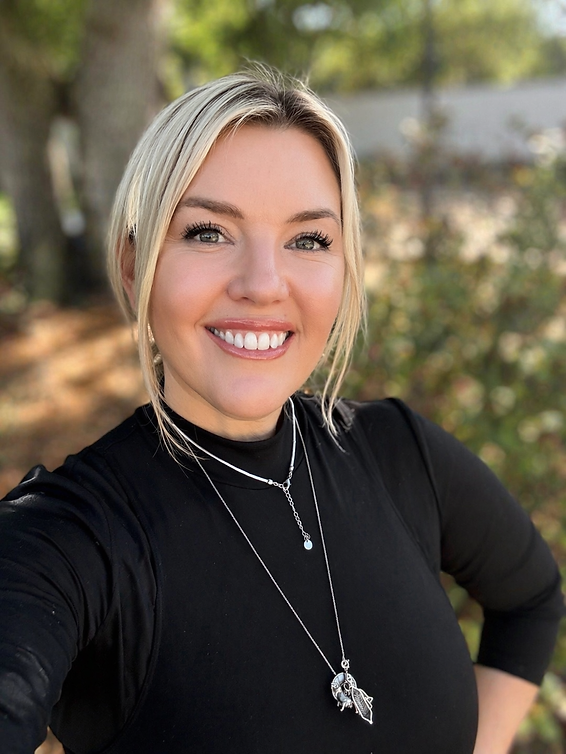
ADAPT was developed by Dr. Maia Gill, a clinical psychologist licensed in South Carolina, who has been building and refining it since 2009. She designs purpose-driven interventions for healthcare and government systems, and the work draws on evolutionary science, purpose-driven psychology, and somatic science.
The instruments are hers as well. The Aligning Purpose Scale for assessing engagement across the areas of life that matter most, the Stepping-Stones Map for building a plan with obstacle-solving built into it, and the IMOK Tracking System for measuring weekly follow-through rather than assuming it, and about 150 other evidenced informed interventions have all have been developed by Maia.
All of them came out of more than fifteen years of applied work, and utilizing research and meta-analysis from evolutionary and positive psychology which is why the framework arrives as a set of usable tools rather than a way of thinking about things.
Who You'd Be Working With

Hillary Boyd
M.A. CMHC, Coach
Hillary Boyd, M.A. in Clinical Counseling and Advanced ADAPT Coach, shares her expertise in applied child development, women's well-being, and integration of diverse healing practices into daily life, with a multicultural population. Hillary accomplishes this by teaching her clients how to become unstuck from barriers in daily living to connect with what one cherishes the most in life. Hillary Boyd, M.A., brings over a decade of experience with specialization in how to set healthy boundaries, defy societal/self expectations to soar, and revive your purpose with science-based skills to move along one's path.

Bill Jarboe
ISA LVL 3, Surf Therapy Certified, Coach
Bill is a combat veteran, husband, father, and the kind of person who found healing in the ocean before he even knew he was looking for it. After years of navigating PTSD, addiction, and the disorienting quiet that follows military service, Bill discovered that the water could reach places nothing else could. What started as a birthday surf lesson became a calling - and eventually a life's work. Bill is a Groundswell-trained surf therapy facilitator who believes healing isn't about fixing what's broken. It's about reconnecting to what was always there. He brings lived experience, radical honesty, and a deep understanding of what it means to carry invisible wounds while still showing up every day.

Amanda Fay Quinn
RYT-500, Yoga Instructor
Amanda Quinn is a 500-hour Registered Yoga Teacher (RYT-500) with a focus on yoga philosophy, psychology, and the transformative practice of Yoga Nidra. She is devoted to helping students move beyond the physical practice of yoga, cultivating self-awareness, nervous system regulation, and inner balance through the timeless wisdom of yoga. Drawing on the profound healing power of Yoga Nidra, Amanda guides students through the layers of body, breath, and mind to invite deep rest, restoration, resilience, and inner peace. Rooted in both yogic philosophy and an understanding of the mind-body connection, her classes weave together mindful movement, breathwork, meditation, visualization, and embodied awareness to support healing while encouraging students to integrate the principles of yoga into everyday life. With a gentle and compassionate approach, Amanda creates a nurturing, welcoming space where students can release chronic tension, reduce stress, quiet the mind, and reconnect with themselves.

Jordan Dasher, Coach
Jordan Dasher is a former Army combat veteran and a graduate of the Warrior Surf Foundation program. In the eight years since, he has volunteered there and taught surf sessions, first as someone going through the program and then as the person in the water with whoever came next. He is lifeguard and CPR certified. He is trained in ADAPT and coaches adults working through transition, burnout, and questions about direction and purpose. Jordan is also an artist, musician, and muralist who uses creative expression to talk about lived experience in a way that reaches veterans and civilians alike, and he has spent years teaching and mentoring in his community. He is a husband and a father of four.
Common Questions
01.
How long does this take?
Most people work with us for eight to twelve weeks. Some continue monthly afterward, and some do a stretch of work, stop, and come back when something changes.
02.
Is this about burnout?
Some people use that word, and some prefer moral injury, the distance between the care you believe in and the care you are able to give. Either fits. The work is the same: getting clear on what matters to you and building action toward it.
03.
Is this therapy?
No. Coaching is non-clinical and involves no diagnosis. Gnosis offers counseling separately with licensed clinicians, for clients located in South Carolina.
05.
I work nights and my schedule changes monthly.
You can book irregularly, or at different times on different weeks rather than on a standing weekly slot, and use the shorter sessions between the longer ones. That is a normal way to do this, not a compromised one.
06.
Can you work with our department?
Yes. ADAPT runs as a facilitated cohort for organizations, with assessment at intake and again at the end. That is separate from individual coaching.
07.
How long does this take?
Most people work with us for eight to twelve weeks. Some continue on a monthly basis afterward, and some do a stretch of work, stop, and come back later when something changes. If a set of orders lands partway through, we can keep going.